

Most WordPress sites score 30-50 on PageSpeed Insights. Our clients consistently achieve 90+. Here’s exactly how we do it.
After working with small business websites, we’ve developed a systematic approach that delivers consistent results. While other agencies promise fast websites, we’ve cracked the code on actually delivering them. This isn’t about quick fixes or temporary improvements – it’s about fundamental optimisation that creates lasting performance gains.
If you’re not sure why achieving high page loading scores matter, consider taking a look at our guide where we explained in our post about why 90+ performance scores matter, the business impact of website speed goes far beyond technical metrics…

The difference between a 40-scoring website and a 90+ scoring website isn’t just technical – it’s transformational for business results. Let’s break down exactly how we achieve these scores, step by step.
The Foundation – Hosting and Initial Setup
Before any optimisation techniques matter, you need the right foundation. Most small business websites fail at performance because they start with poor hosting decisions.
Server Requirements That Actually Matter
SSD Storage is Non-Negotiable. Traditional hard drives are performance killers. SSD storage reduces database query times by 300-500%. Every database call (which happens constantly on WordPress sites) becomes lightning fast.
Regional-Based Hosting for Local Businesses. If your customers are in the UK, your server should be too. A server in London loads 200-400ms faster for UK visitors than one in the US. That alone can improve your score by 5-10 points. Similarly, if you’re based in the US, your server should be US-based. Generally, the closer your server is to your customers, the faster your site will load.
PHP 8+ and Modern Software Stack. Older PHP versions are significantly slower. PHP 8.2 runs WordPress 15-20% faster than PHP 7.4. Most small business websites still run outdated versions because their hosting provider hasn’t upgraded.
WordPress Configuration for Speed
Plugin Audit is Critical. We regularly see sites with 40+ plugins. Each plugin adds processing overhead. Our rule: if a plugin doesn’t directly generate revenue or essential functionality, it goes. Essential plugins only:
- Security (1 plugin maximum)
- Backup (1 plugin maximum)
- SEO (1 plugin maximum)
- Caching (1 plugin maximum)
Theme Selection Impact GeneratePress and similar lightweight themes load 50-70% faster than popular “multipurpose” themes like Avada or Divi. Heavy themes often load 2-3MB of CSS and JavaScript before showing any content.

Advanced Technical Optimisations
This is where most agencies stop, but it’s where we really begin. These techniques require technical expertise but deliver the biggest performance gains.
Image Optimisation Beyond Compression
WebP Conversion with Fallbacks Converting images to WebP format reduces file sizes by 25-35% compared to JPEG, with no visible quality loss. But implementation matters – you need proper fallbacks for older browsers.
Responsive Image Implementation WordPress generates multiple image sizes, but most themes don’t use them effectively. We implement proper srcset attributes so mobile users download mobile-sized images, not desktop versions scaled down.
Lazy Loading with Threshold Optimisation: Images below the fold shouldn’t load immediately. We implement lazy loading with a 200px threshold – images start loading 200px before they come into view, creating a seamless user experience.
CSS and JavaScript Optimisation
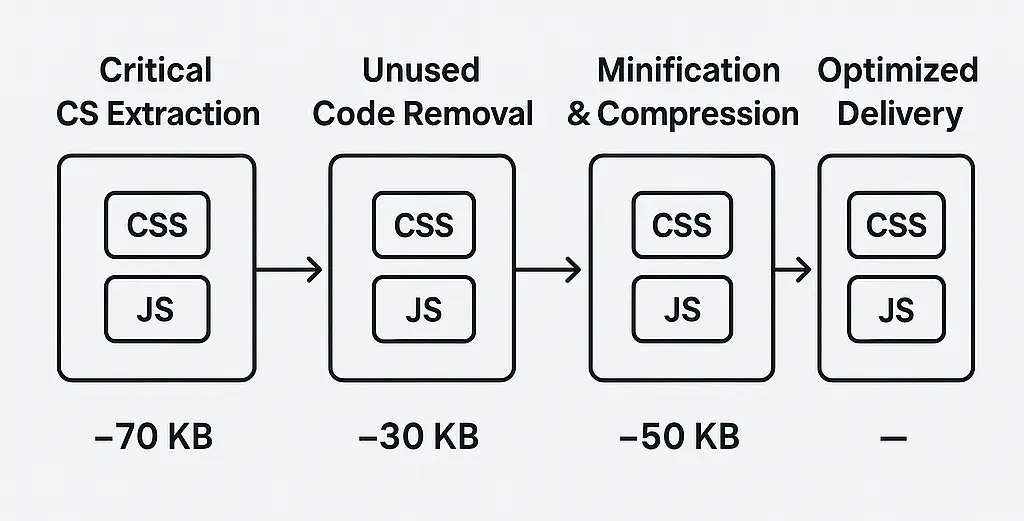
Critical CSS Identification: We extract the CSS needed to render above-the-fold content and inline it directly in the HTML. This eliminates render-blocking CSS for the most important part of your page.
Unused CSS Removal: Most WordPress themes load CSS for features you don’t use. We analyse your actual pages and remove unused CSS. This often reduces CSS file sizes by 60-80%.
JavaScript Defer and Async Loading: Non-critical JavaScript files get deferred until after page load. Critical JavaScript gets async loading to prevent blocking. Contact forms, analytics, and chat widgets all load after the page displays.
Font Optimisation Strategy
The Google Fonts Problem Loading Google Fonts typically adds 500-800ms to page load time. We’ve solved this with a systematic approach:
System Font Implementation: We use carefully selected system fonts that look professional but load instantly. Modern system font stacks like -apple-system, BlinkMacSystemFont, "Segoe UI" provide excellent typography without external requests.
Font Display Optimisation When custom fonts are absolutely necessary, we implement font-display: swap to show text immediately with fallback fonts, then swap to custom fonts when loaded.
Caching and Server-Level Optimisation
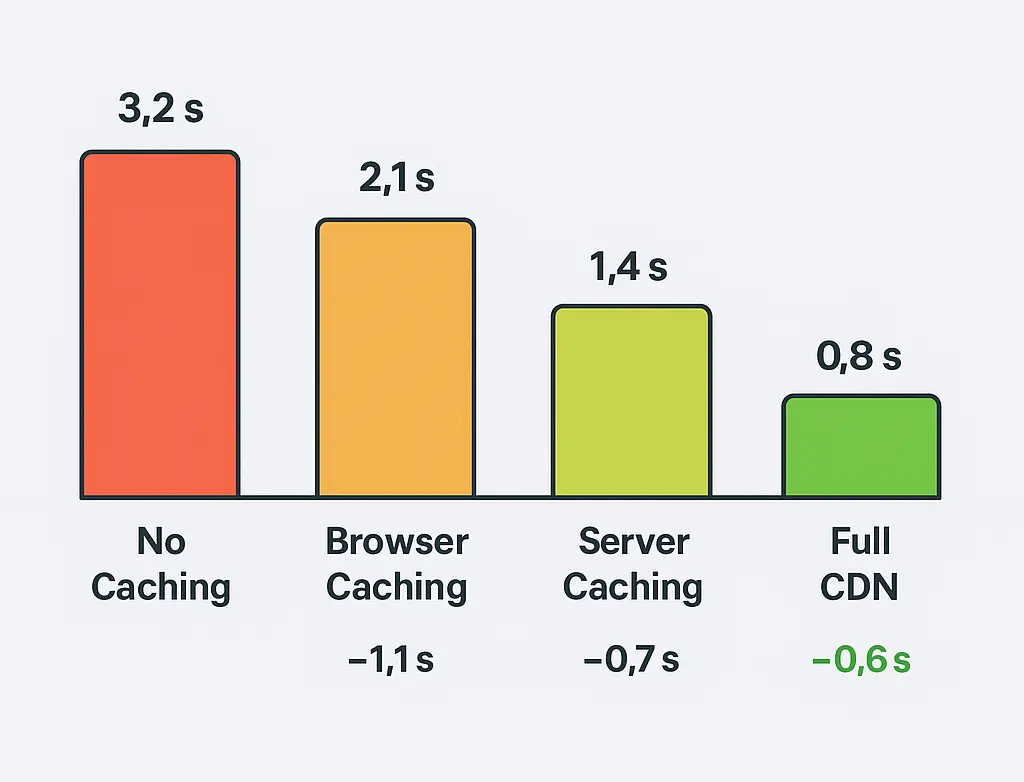
Caching is where amateur optimisations often break websites. Done correctly, it can cut load times in half.
Multi-Layer Caching Strategy
Browser Caching Configuration: We set optimal expiry headers for different file types:
- Images: 1 year
- CSS/JavaScript: 1 month
- HTML: 1 hour
Server-Side Caching Object caching stores database query results in memory. Page caching serves static HTML versions of dynamic pages. Both together can reduce server response times by 80-90%.
CDN Implementation for UK Businesses Content Delivery Networks store your files on servers worldwide. For UK businesses, we configure CDNs with a strong UK presence to ensure fast loading across the country. We also adopt the same policy for global customers, following the theme of getting the server as close to the potential customers as possible.
Database Optimisation
WordPress Database Cleanup WordPress stores everything – post revisions, spam comments, expired transients. A 6-month-old website often has thousands of unnecessary database entries. We remove:
- Post revisions (keep last 3 only)
- Spam and trashed comments
- Expired transient data
- Unused metadata
Database Query Optimisation: We identify slow-running queries and optimise them. Sometimes a single poorly written query can add 200-300ms to page load time.
Measuring and Monitoring Performance
Optimisation without measurement is guesswork. We track specific metrics that correlate with business results.
Key Performance Metrics
Core Web Vitals Focus
- Largest Contentful Paint (LCP): Target under 2.5 seconds
- First Input Delay (FID): Target under 100 milliseconds
- Cumulative Layout Shift (CLS): Target under 0.1
Real User Monitoring Lab testing (like PageSpeed Insights) shows potential performance. Real User Monitoring shows actual user experience across different devices and connections.
Continuous Monitoring Setup
Automated Performance Alerts: We set up monitoring that alerts us if performance drops below 90. This catches problems before they impact business results.
Monthly Performance Audits: Website performance degrades over time as content is added and plugins are updated. Monthly audits catch and fix performance regressions quickly.

Common Optimisation Mistakes to Avoid
During our work optimising local business sites, we’ve seen every possible mistake. Here are the biggest ones that can break your website:
Over-Optimization Problems
Aggressive Caching Issues: Too much caching can break contact forms, shopping carts, and user accounts. The key is knowing what to cache and what to exclude.
Plugin Conflicts Optimisation plugins often conflict with each other. Using multiple caching plugins or optimisation tools typically makes performance worse, not better.
Breaking Functionality for Speed Removing “unnecessary” JavaScript sometimes breaks essential features. We always test functionality after every optimisation.
Technical Implementation Errors
Incorrect Image Format Usage WebP isn’t supported by all browsers. Serving WebP without proper fallbacks breaks images for some users.
CSS Critical Path Mistakes: Inlining too much CSS creates other problems. The critical CSS should be minimal – just enough to render above-the-fold content properly.
Results: What 90+ Scores Actually Deliver
The technical achievements are impressive, but business results matter more. Here’s what our clients typically see:
Search Engine Performance
Ranking Improvements: Faster websites consistently rank higher. We typically see 15-25% improvement in search visibility within 60 days of optimisation.
Mobile Search Benefits With Google’s mobile-first indexing, mobile speed directly impacts all search rankings. 90+ mobile scores often lead to significant organic traffic increases.
User Experience and Conversions
Bounce Rate Reduction: Fast websites keep visitors engaged. We typically see bounce rates drop by 20-35% after comprehensive optimisation.
Conversion Rate Improvements: Users trust fast websites more. Form submissions and phone calls typically increase 15-30% after speed optimisation.
Professional vs. DIY Optimisation
While some basic optimisations are possible for technically-minded business owners, comprehensive speed optimisation requires specialised knowledge and tools.
What You Can Do Yourself
Basic Image Optimisation: Installing an image compression plugin and converting to WebP can provide modest improvements.
Plugin Audit Reviewing and removing unnecessary plugins is straightforward and can provide immediate benefits.
Hosting Upgrade Moving to better hosting with SSD storage and modern PHP versions is often the single biggest improvement you can make.
What Requires Professional Expertise
Advanced Caching Configuration Setting up multi-layer caching without breaking functionality requires experience with various scenarios and edge cases.
Code-Level Optimisation CSS and JavaScript optimisation, critical path analysis, and custom performance enhancements require development skills.
Performance Monitoring and Maintenance: Ongoing optimisation requires tools and processes that most small businesses don’t have access to.
Getting Started with Professional Optimisation
If you’re ready to achieve 90+ performance scores for your website, here’s how the process works:
Performance Audit and Planning
We start with a comprehensive analysis of your current website:
- Current performance scores and bottlenecks
- Technical infrastructure assessment
- Business impact analysis
- Optimisation roadmap development
Implementation Timeline
Phase 1 (Days 1-2): Foundation
- Hosting and server optimisation
- Plugin audit and cleanup
- Basic caching implementation
Phase 2 (Days 3-5): Advanced Optimisation
- Image optimisation and conversion
- CSS/JavaScript optimisation
- Font strategy implementation
Phase 3 (Days 6-7): Testing and Monitoring
- Comprehensive functionality testing
- Performance monitoring setup
- Final optimisation tweaks
Most clients see significant improvements within 48 hours, with final optimisation completed within one week.
Maintaining Your 90+ Performance
Achieving 90+ scores is just the beginning. Maintaining that performance requires ongoing attention:
Monthly Maintenance Tasks
- Performance score monitoring
- Plugin update impact assessment
- New content optimisation
- Cache clearing and optimisation
Quarterly Optimisation Reviews
- Full performance audit
- New optimisation technique implementation
- Competitive performance analysis
- Business impact assessment
Ready to Achieve 90+ Performance?
Website speed optimisation isn’t just about technical metrics – it’s about business results. Faster websites generate more leads, convert more visitors, and rank higher in search results.
Every day your website loads slowly is another day of lost opportunities. While your competitors struggle with 30-50 PageSpeed scores, you could be dominating with consistent 90+ performance.
Ready to see what 90+ performance could do for your business?
Our comprehensive website speed optimisation service has helped small businesses achieve consistent 90+ PageSpeed scores. We handle everything from initial audit to ongoing monitoring, ensuring your website stays fast as your business grows.
Contact us today for a free consultation for your website performance audit. We’ll analyse your current performance, identify specific optimisation opportunities, and show you exactly how 90+ scores could impact your business results.
Transform your website performance today. Our affordable small business website service includes comprehensive speed optimisation that consistently delivers 90+ PageSpeed scores. Book your free consultation to discover how faster loading times can drive more customers to your business.
